Do you have any questions ?
+ 33 (0)3 20 23 40 44
contact@imattec.com

Index :
The origins of Kevlar, the first material on the market, date back to the 1960s. In 1965, the formula for poly(paraphenylene terephthalamide) or PPTA was discovered by DuPont during research into polymers for use in tire reinforcement, with the aim of producing lightweight, durable tires. While manipulating polymer solutions, PPTA was discovered. After spinning, its exceptional performance became apparent, and Kevlar was born. Kevlar was marketed by Dupont in 1971 and quickly became a benchmark, particularly in the field of ballistics. Twaron was marketed in 1986 after research carried out at the Dutch factory Akzo. After passing through several hands, Twaron was taken over by Teijin (Japan) in 2000 and has since been marketed by Teijin Aramid. After the emergence of several competitors to Kevlar, particularly following the expiry of Kevlar patents in the 2000s, Kevlar remains the world leader, notably due to its strong presence in the United States for military applications, among others.
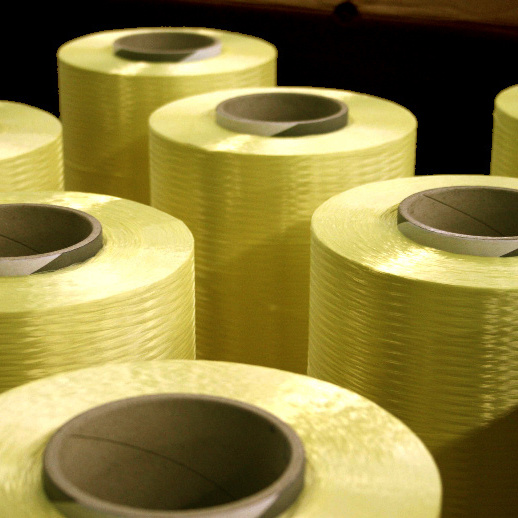
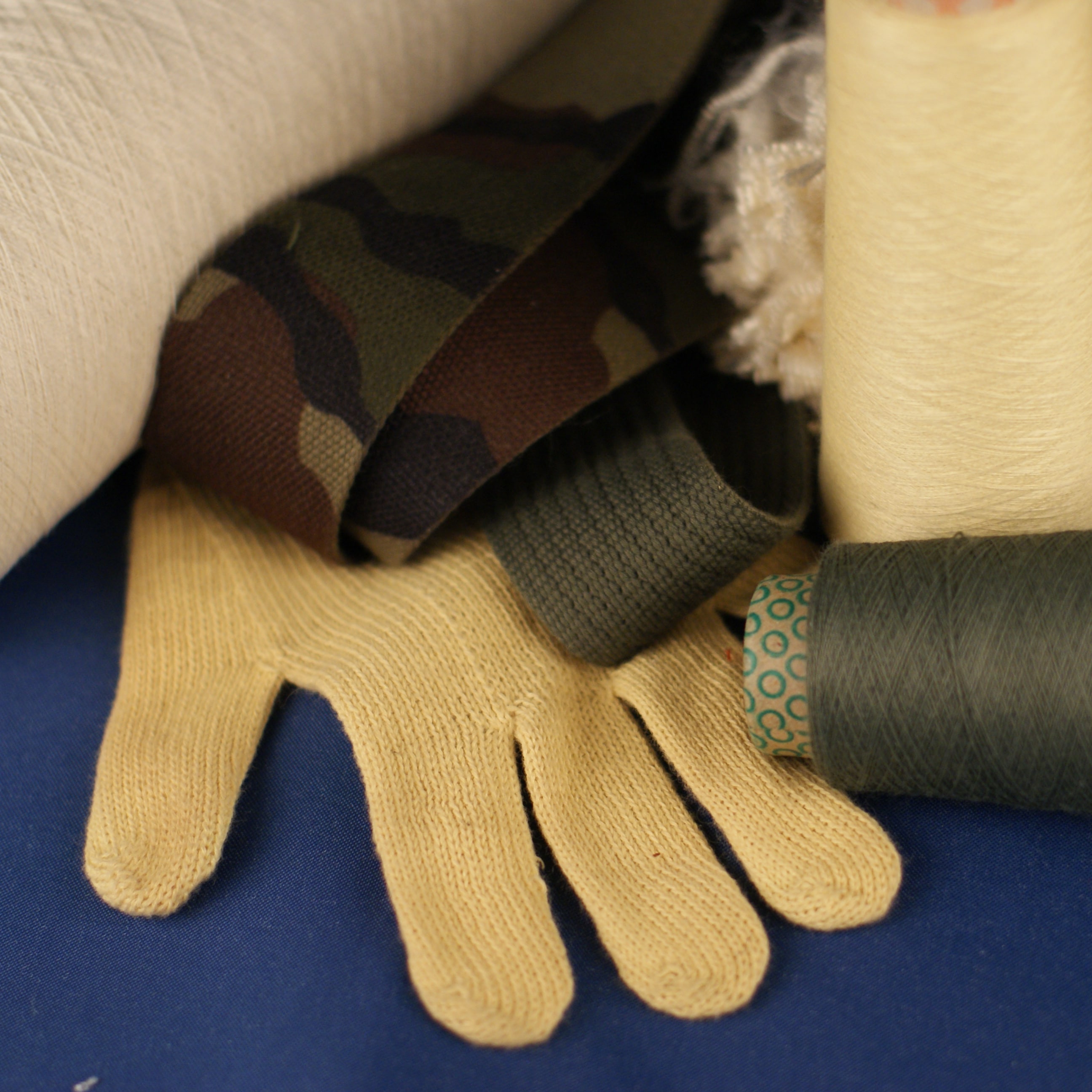
Meta-aramid fibers (Nomex®, Conex®, Kermel®, etc.) and para-aramid fibers (often referred to by the trade name Kevlar®) (Kevlar®, Twaron®, etc.) are both fibers with no melting point (they carbonize) used for their thermal resistance (200-250°C). However, the important difference between meta and para aramid ‘Kevlar’ lies in their mechanical strength, with para-aramid (natural yellow color) being much more mechanically resistant. ‘Kevlar’ is regularly used and well known in bulletproof vests and woven ballistic protection (bulletproof jackets, vehicle armor, helmets, ballistic composites, impact-resistant fabrics, etc.).
Meta-aramid fibres (Nomex®, Conex®, Kermel®...) or para-aramid fibres (often the trade name Kevlar® is used as a generic name) (Kevlar®, Twaron®...) are both fibres with no melting temperature (it carbonise) used for their thermal resistance (200-250°C). However, the important difference between meta and para-aramid “kevlar” lies in the difference in mechanical strength, para-aramid (natural yellow colour) being much more mechanically resistant and “kevlar” being regularly used and well known in bullet-proof waistcoats or ballistic protection fabrics (weaved fabric for bullet-proof vests, vehicle armour, helmets, composits, anti-impact liners etc...).
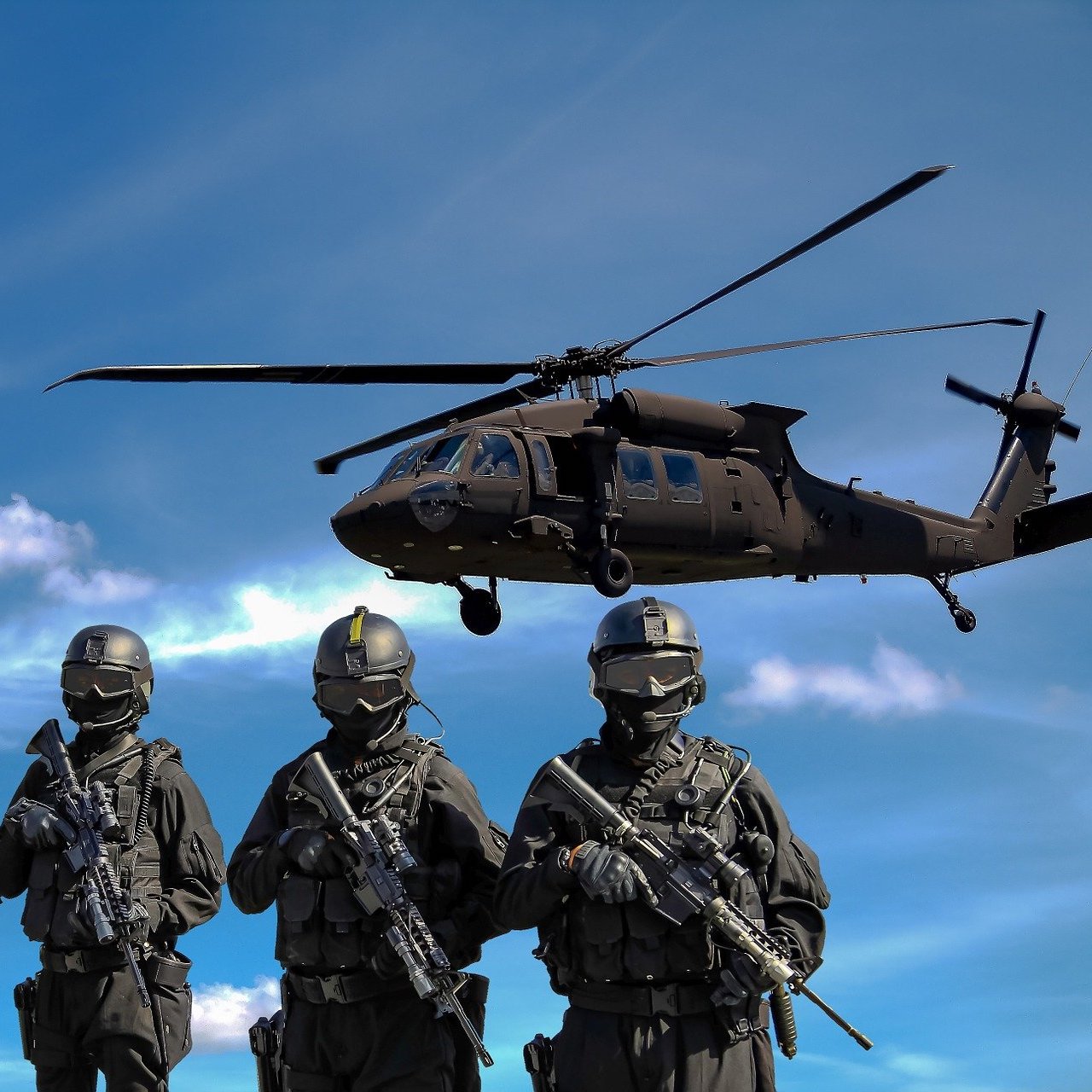
These aramids as nomex, kevlar, twaron... fibres are the most widespread and make up the majority of textiles for technical uses. They are used in a wide range of sectors, including the automotive industry (composites, tyres, etc.), sport (ropes, composites, etc.), defence and security (fire and heat protection, bullet-proof waistcoats and other flexible or rigid ballistic protection, blade-protection jackets, etc.), transport, aeronautics and aerospace, etc...
It should be noted that aramid fibres are not, or only with difficulty, dyed and that the colour ranges are often limited. The significant additional costs and minimum quantities of large processing operations may be required if coloured flame retardant fibres are required.
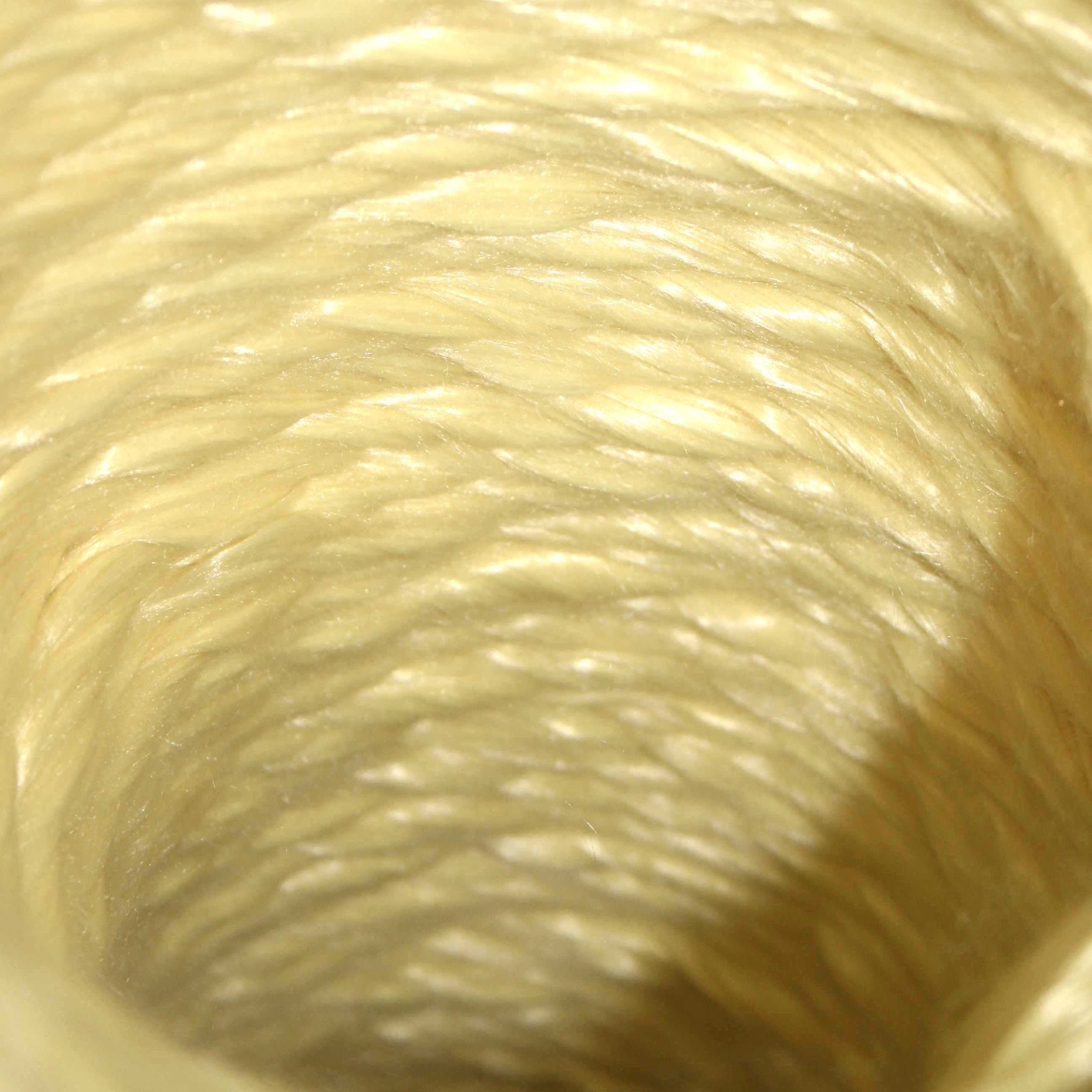
It should also be noted that Kermel, a French fibre, with flame-retardant properties and an raw yellow colour rather than the raw white of Nomex and Conex (dope dyeing possible), is a Polyamide-imide fibre generally classified in the meta-aramid family.
The poly(paraphenyleneterephthalamide or PPTA) fibers that make up Kevlar, which, remember, is a textile fiber, are obtained through a process called “solvent extrusion” or “wet extruction.”
General steps in Kevlar production :
1) The polymer is dissolved in an acid solvent, usually concentrated sulfuric acid for Kevlar, or a mixture of acids or special solvents for Twaron para-aramid.
2) The “doped” solution is extruded through a spinneret (to put it simply, this is a kind of sieve with very fine holes) into a coagulation bath.
3) The Kevlar fiber precipitates, solidifies, and is stretched during or after coagulation.
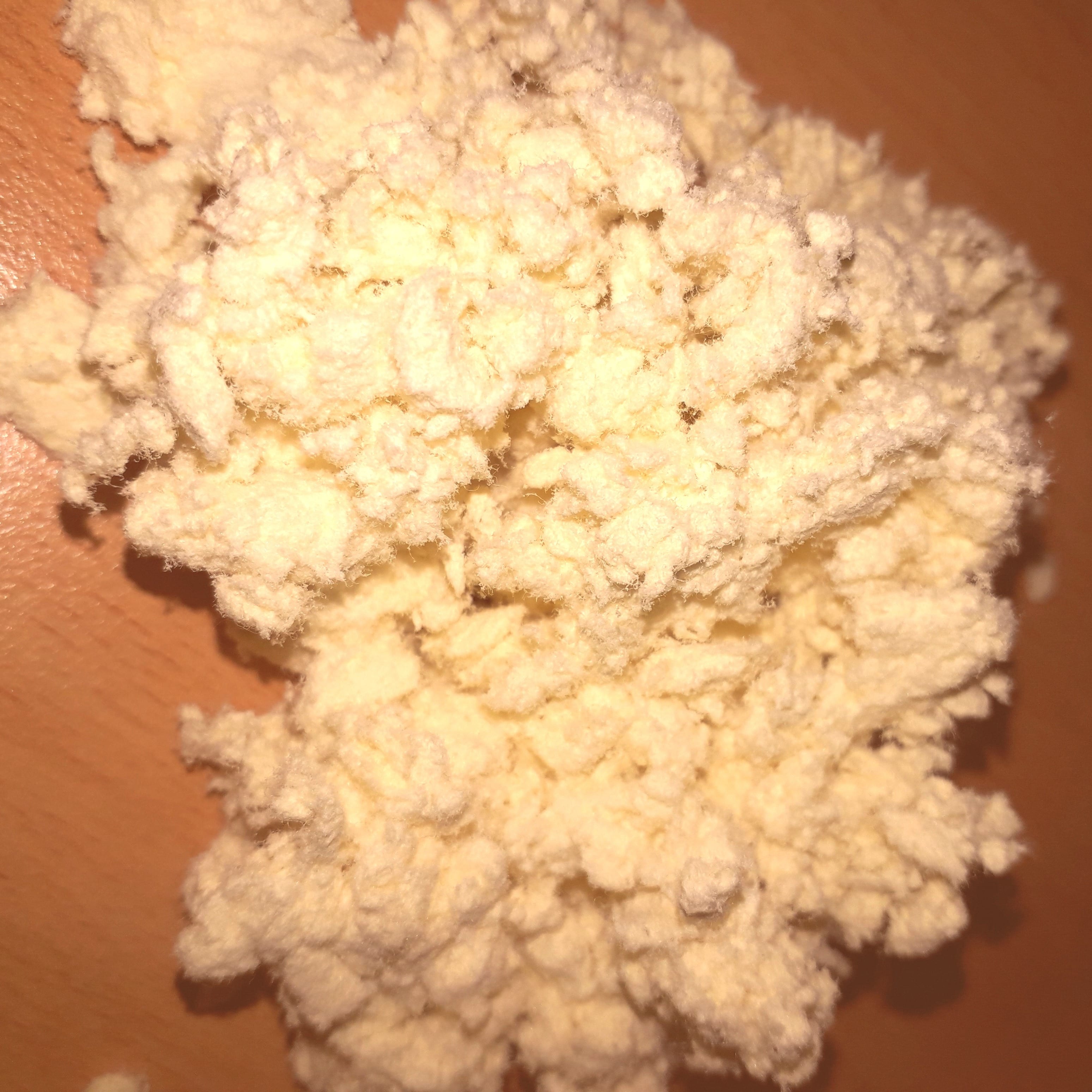
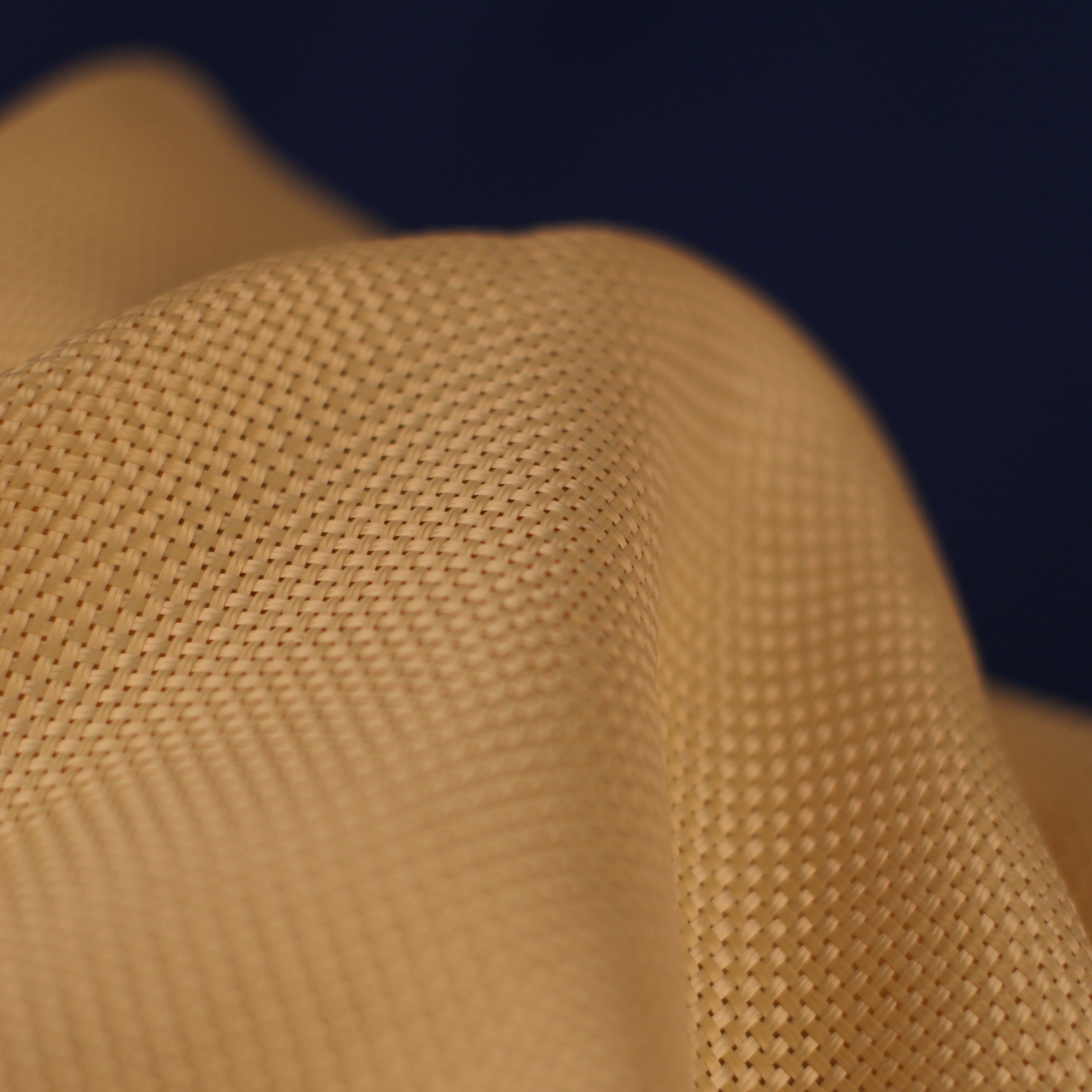
Once wound, Kevlar aramid can be woven, knitted, braided, etc. The aramid fabrics produced in this way can, for example, be cut and sewn and layered to make bulletproof vests or other anti-splinter or high-impact performance items. Alternatively, aramid can be cut and then blended for countless different uses that require its mechanical and thermal performance.
Kevlar' or more precisely “para-aramids” are, among many other applications requiring high mechanical tensile strengths. Kevlar and others are used in knitted or weaved fabrics for very transverse applications requiring high mechanical resistance to traction, cutting and impact. They are commonly used in composition of bullet-proof waistcoats, ballistic body armour, shrapnel-proof fabrics or projectiles of all kinds (mechanical piece, stones, shrapnel... at high speed) for goods and people, in flexible or rigid structures (composites - helmets, jackets, structural reinforcements, protective panels, textile reinforcement in tires...) or in cut-resistant gloves, or blade-proof fabrics or shrapnel-proof weaved fabrics or jackets.
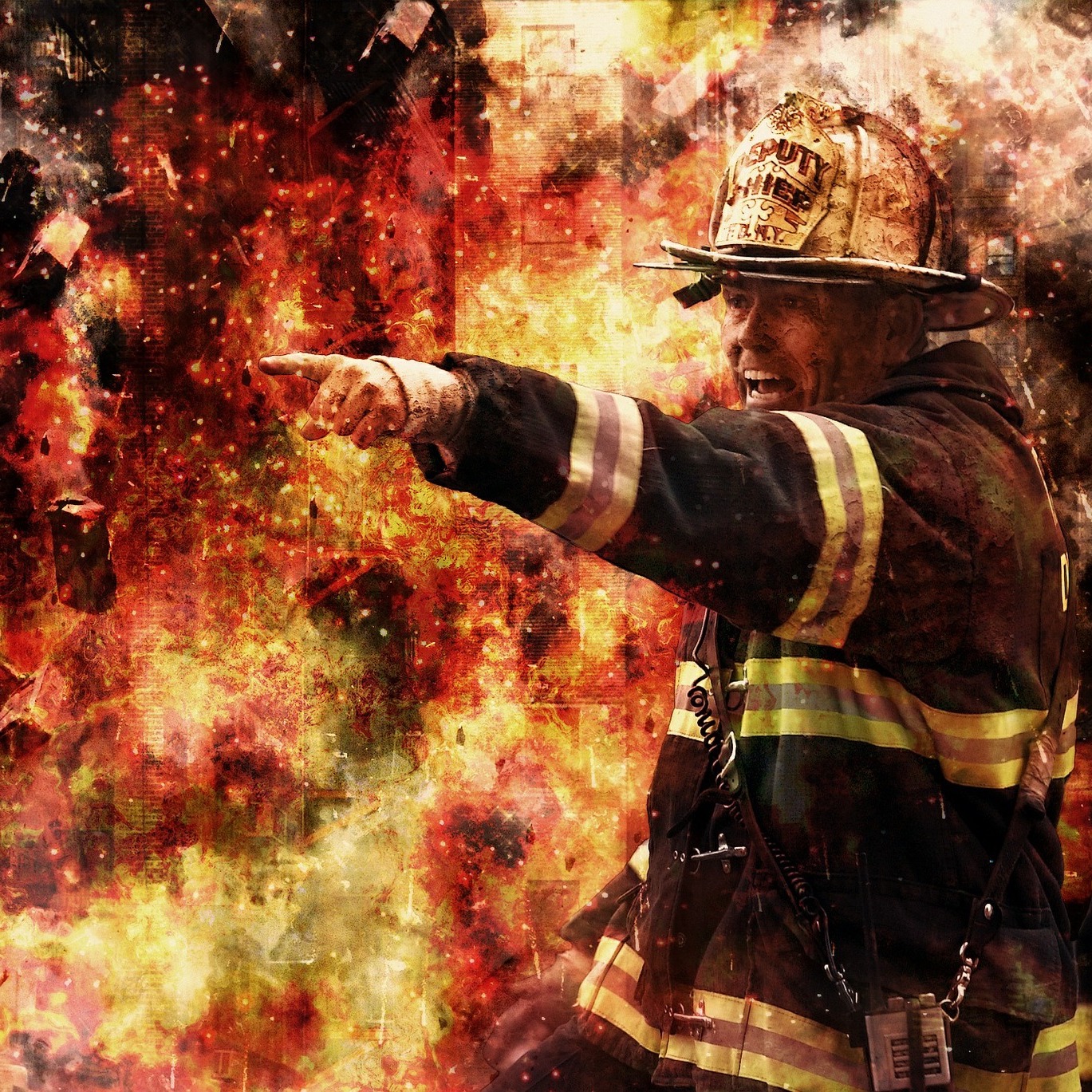
As for meta-aramid (from raw white for Conex or Nomex to yellow-orange colour for Kermel for example), it is rather present in PPE (Personal Protective Equipment) such as motor racing suits, or firemen's equipment, alone, or combined if necessary with other fibres, such as para aramid to improve the breaking strength of the suit for example.
Our complete and flexible spinning equipments (ring spinning machine, unconventional spinning, covering, twisting, cabling, multiple assemblies...) allow the realisation of a multitude of different yarn structures (covered, cabled, twisted, composites, intimate blends...).
Our yarns are made-to-measure (taylor-made) and made from quality virgin fibres.
We are able to adapt our settings according to your use of our yarns in: section, direction or level of twist, pilosity, density... for your weaving, knitting, sewing, braiding, embroidery applications...
IMATTEC offers its know-how in the development of fabrics and semi-finished textiles with advanced characteristics, also bullet-proof fabrics and shrapnel-proof weaved fabrics, impact resistant textiles... :
Woven, knitted or non-woven fabrics, socks, gloves, ballistic fabrics... incorporate our yarns and fibres and are made either internally in our own workshops based in France, in Tourcoing, or by our network of partners.
For this kind of solution, we study each request on a case-by-case basis and offer tailor-made solutions.
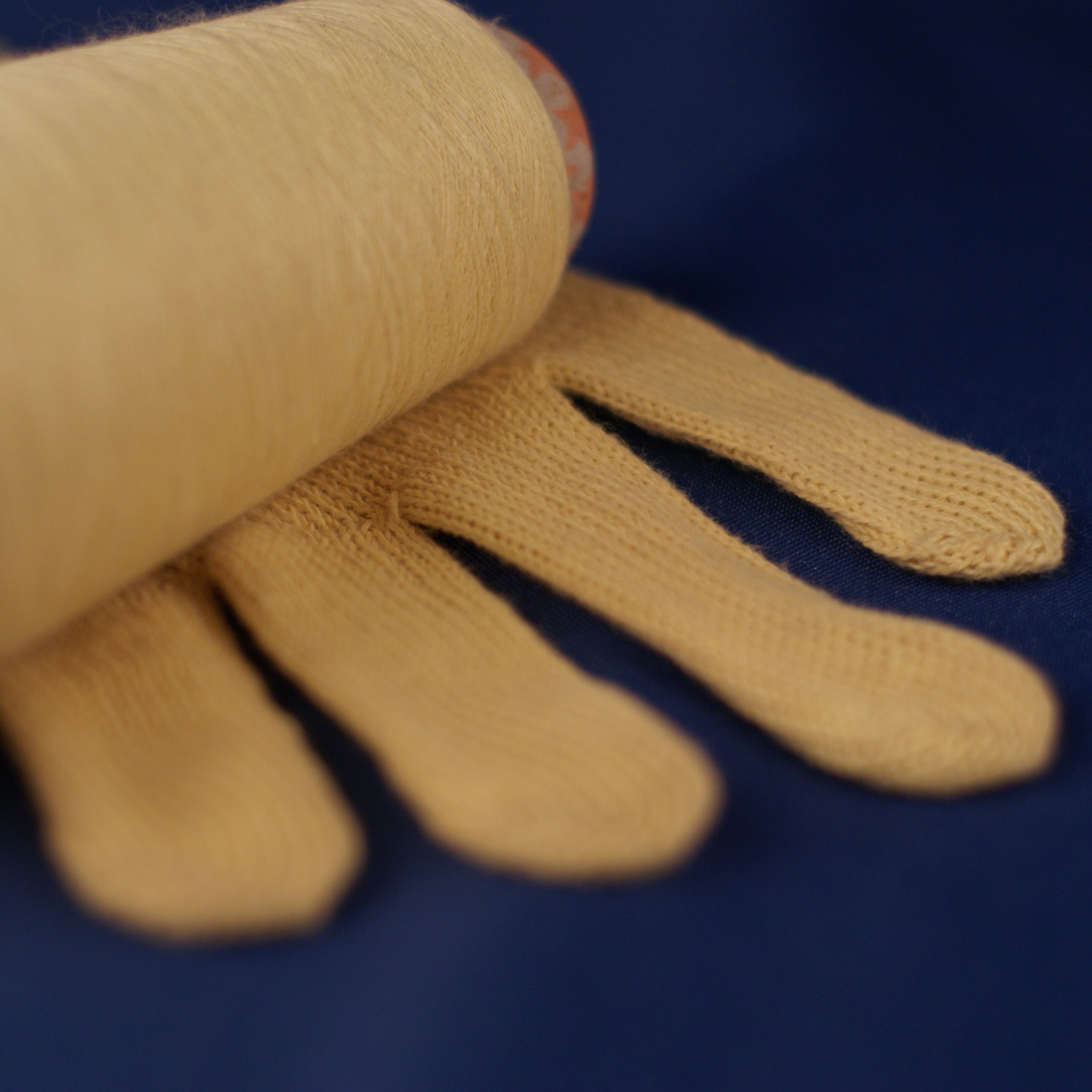
Gloves, socks, sleeves, hats, tapes (woven, knitted, braided), sleeves, slivers, cords, braids, hood, sheets, mitten, rolls of fabrics, ...
Ask us! We can develop the textile solution according to the technical requirements of your application.
The use of a treatment and dyeing system on yarns that enables the dyeing to be carried out when possible, but also washing, depositing, functionalizing in a bath....
IMATTEC is the exclusive distributor of GASHA. GASHA, meaning "shield" (Ethiopia), is a 100% para-aramid ballistic bulletproof fabric woven by TIBEKA Protections in 3D interlock (100% made in Europe) with a technology patented by TIBEKA Protections. It is the first and only fabric that provides shock and impact protection, including ballistic protection, even when shaped in 3D. It's unique! It's an ideal flexible fabric if you want to simplify your life when developing complex 3D shapes such as protective helmets, women's bulletproof vests, armored tarpaulins, or protection against stones and projectiles of all kinds, or your flexible or rigid protection (composites) with complex shapes (military, defense, security, motorsports, combat sports, agricultural machinery) on the one hand, but also by the number of plies (aramid layers) on the other.
To learn more, visit the GASHA page